I seriously feel like Tom Hanks in You've Got Mail when he's blowing on his fingers, about ready to type. I haven't been this ready to type something juicy since I ripped Ann Coulter five years ago. Those were some good writing days. Everything else was garbage.
Disclaimer: This is likely to be the most informal post I've ever written. Then again, I haven't written a whole bunch in this blog in a few years. Oh well. We'll see how this turns out.
Over the weekend, Chris Long, defensive end for the [then] St. Louis Rams, New England Patriots, and more recently the Philadelphia Eagles (winning back-to-back Super Bowl rings with the last two teams he played for), announced his retirement from the NFL after 11 seasons. Yesterday, news outlets including Reuters released articles revealing that the now-retired Long had partaken in marijuana use for pain management and stress relief, and was able to pass drug tests otherwise because "players knew when it was." This is amid the NFL and NFLPA looking for new means for the pain management and alternative therapies for players on and off the field. [1]
In today's social climate, a rather high percentage of those who have heard the story are in that frame of mind where they're saying, "he was responsible, and still playing at a high level; marijuana should just be legalized by now." However, there is still a number of people stating, "kids look up to him, so what does that mean for them?" On the other hand, there is a lot to be said when the NFL and their Players' Association are taking strides to curb the standard means of pain management, and look for stronger, more effective ways to not only take care of their players, but increase their quality of life after their careers are over. In an era that is riddled with cases of post-concussion symptoms in athletes, and in a sport with a higher percentage of athletes suffering from chronic traumatic encephalopathy (CTE) late in life, protection and pain management is so important. While the game has changed and evolved over the last 40 years, it may be high time (no pun intended) for medical care to evolve the same way.
However, you have others that want other means instead of something that is still seen by a number of people as "bad." This is where that mental blockage happens.
--
Before I deviate into my own thoughts and commentary, checking out Chris Long's Twitter would be a great thing to do in order to hear his ongoing thoughts on the matter. Something tells me people are going to be attempting to rail him for a while, all while he digitally sacks them.
--
I don't know... What's worse, him "being hooked on marijuana," (which,
by the way, nobody's ever overdosed on that), or him taking pain meds
and/or taking up drinking. With the overall stress levels and physical
demands of the game--especially as a defensive end--doing the latter
could result in the possibility of getting addicted to them long after
the game is over. Of course, people are also pointing fingers that his father is Hall Of Famer Howie Long and they're not going to touch him. It's kind of a weak and bogus argument, when you think about it.
Remember prohibition? While alcohol was banned at the time, people still found way to retrieve it and consume/abuse it. The same applies to cannabis; if the benefits have been seen, there won't be any stopping it unless you sanction heavy criminal charges on it.
On that same token, opioids are legal, and because of their accessibility, it's easy to purchase, consume, and overdose it.
It's no secret that the opioid crisis is at an all-time high in the United States, and we're facing a number of casualties from those who not only dealt with physical pain, but mental and emotional pain as well. In an example not related to sports, Austin Eubanks, a survivor of the shooting at Columbine High School 20 years ago, was found dead earlier this week at his home. According to a statement from his family, it may have been due to his known struggles with opioid addiction. After the incident, he opened up about his addiction and later became a public speaker, helping those fight the very issue that he had firsthand experience with. Long after the physical issues had ceased, opioids were used to take the emotional edge off of the struggles of moving forward and existing. It simply became a way to function. [2]
If Chris Long was this open about this after his retirement, and he played at the level he did, he was obviously responsible, and still had a stellar career not only on the field, but off the field. During the 2017-2018 NFL season, he made headlines by donating that season's salary to a different charity each week. He was also the recipient of the Walter Payton Man of the Year Award this past season for his charity work not only in the city of Philadelphia, but countrywide.
There is still a massive stigma against the use of a substance that was still considered to be taboo up to the turn of the century. Although medical marijuana is becoming more widely accepted, as those versions do not contain THC (the element that creates the "high"), the "street" versions are still seen as a gateway drug, leading to other irresponsibility and mischief. People are more likely to think of Reefer Madness or believe that comedies like the Cheech & Chong films are true-to-life. If all films are actual representations of a product, then Thanos' snap in Avengers: Infinity War should have knocked out half of humanity by now, and even if that half was brought back, those people have probably missed five years of brain cells in the process, which is kind of where the idea of marijuana legalization got lost for most in the logic department.
Marijuana's societal image is in a similar track to how gay marriage and racial inequality are ongoing hot issues. As a kid, you're not going to judge anything unless you see your parents or older family members make a comment about it, because then, it's that mentality that they know best, and disagreeing with them at a young age is a recipe for destruction. When the adults and parents are crying foul over it and completely shutting down the thoughts of benefit, then the "superiors" influence will trickle down to the kids, and the taboo returns. It makes me think of a scene in the film 42 when the father and son attend a ballgame, and when the son sees his father referring to Jackie Robinson as a particular name, the kid thinks it's completely OK to do that because his father is acting that way, so he follows suit. It's painful to watch, but that all happened, and it probably still is...because this is America.
Athletes using marijuana to handle pain and stress is the LEAST of the worries of sports leagues. Back in times' past, there were athletes that not only abused pain medication, but abused alcohol--which, by the way, that's all legal--and the long-term effects of those two substances mentioned are much more damaging than cannabis. (See: A painfully high percentage of professional wrestlers before drug monitoring But hey, opioids are still bringing in revenue to pharmaceutical companies, and cannabis could take that away because it can't be controlled, even if it were taxed.
This is getting ugly now, so this is where I exercise my restraint, because it's all fun and games until somebody reads something, and as soon as they see something they don't agree with--snowflake!
Although many of us are completely aware of the benefits of cannabis, and the benefits of its other forms such as CBD oil and edibles, the "devil's lettuce" is still banned in a lot of regions, and possession could be considered a high criminal offense. One of those regions is Japan. Banned since 1948, you face the possibility of time in prison, regardless of how much is in your possession. The culture and lifestyle difference is a major factor, and their stance probably isn't going to change anytime soon. But then again, they also don't have American football, and they're not undergoing the physical demands that our athletes have to meet year in and year out. Valid logic, I'd say.
We're still trapped in a society where our priorities are still a bit messy. Our health system is still in shambles, and our means of handling addiction--rehabilitation and the subsequent outpatient care--is still seen as something that are only for the worst of cases, not for those who have a growing issue but haven't outright admitted that there's a problem. There are other options, and when done responsibly, you know, the way everything in this life should be done, we're going to see really positive results. Not everybody is going to get that memo, and that's totally normal. Think of it this way: food and exercise are good, but sometimes people can get too much or too little of those, and that can be detrimental to your health if you're not responsible or have an ongoing illness.
The one worry that is possibly going to come from this is whether there are going to be more random drug tests to make sure that players are "keeping clean" from marijuana use after Long had admitted to knowing how to avoid a failed test. However, I don't think it's going to affect anything. Marijuana is not a performance-enhancing drug. It may be a substance that can enhance the body's ability to handle pain and stress, but it doesn't affect overall muscle build/performance, and it doesn't contain the same type of chemical compounds as something like adderall.
Do I feel as though we're making a big deal out of nothing? Yes. We have so much more access to knowledge and case studies, and there's no excuse to ignore how athletes have to adjust to the rigorous careers they have chosen. Let's just be grateful Chris Long is doing as well as he is. The last thing we'd want to see would be more football players becoming casualties because we can't help them out now.
-- Stephanie
___________________
Other articles referenced:
[1] Long admits marijuana use, points to flaws in NFL testing - Reuters - https://www.reuters.com/article/us-football-nfl-long-marijuana-idUSKCN1SS2Y0?utm_campaign=trueAnthem:+Trending+Content&utm_content=5ce5e75272c13d0001ebca69&utm_medium=trueAnthem&utm_source=twitter
[2] Columbine survivor and public speaker Austin Eubanks, 37, loses his battle with addiction - CNN.com -

Thursday, May 23, 2019


Wednesday, April 3, 2019
AmoebaLL: The Business of American Football
It was only a matter of time before we saw something like this. There are times in which I'm glad that I'm still a writer and that I still have this blog. This is one of those times. [hugs laptop]
According to a number of sources, as of this Tuesday, the Alliance of American Football, after only about eight weeks of play, has suspended their operations indefinitely.
Although starting out strong, and really grabbing the attention of current NFL fans and political patriots that are "boycotting" the league, finances and issues involving structure and investment have weighed down the league so quickling to the point of essentially hanging itself. Not only this, there were meant to be two more weeks of games, and then playoffs leading to a championship on April 27. However, with this suspension, this will not come to pass.
In fact, there are already reports filing in as early as a few hours ago that employees are being told that today is their last day in working with AAF. Basically, they're telling them in a nice way that the league is folding, and to take their ball and go home.[1] It's a pretty awful thing to witness, considering that they had a lot of promising talent in the league, and games were even being broadcast on NFL Network, almost in a sign of solidarity of the owner's efforts.
The AAF and NFL already had some striking differences in regard to rules. I liken it to NFL Blitz versus the current Madden games being churned out every year. For example, there are no extra point kicks after a touchdown; instead, every team must go for a two-point conversion after each touchdown. Not only that, player safety was judged by what was called a "sky judge," so based on all of the commotion with what a "roughing the passer" call was in the NFL this year, this was beyond refreshing to see.[2] For example, watch this. Now you know why heads turned toward the league.
Despite the fact that the gameplay was excellent, and the fact that there were people that actually did watch the games, it was accessibility, and of course, the root of all evil, money.
No matter how far along in a league you are, or how shrewd of a businessman you are, it has everything to do with how much money you have, where you got it from, and where it's ultimately going. Plus, it's always a smart thing to actually have full commitment from your owners and operators. In this case with the AAF, the right hand literally did not know what the left hand was doing. According to the Dallas News, Tom Dundon, a local billionaire to them, had recently become chairman and majority owner after pledging that he was going to be putting $250 million of his own money into the league. On one hand, he delivered $70 million of that upfront, but on the other hand, the rest of it was going to come in periodic payments to keep the league alive.[3]
Then it just wasn't happening.
Dundon obviously had the ability to pull funding, and boom goes the dynamite.
Supposedly, there were talks going on between the owners of AAF (well, mainly Dundon) and the NFLPA to make AAF a "launch pad," or in other words, a "minor league" that'll boost AAF players into earning a future deal with the NFL. In the reports that followed, Dundon had stated he considered "folding the league" if those plans did not come to fruition.[4] Pretty gutsy, but I'm sure that it wasn't just the whole idea of AAF being a "launch point," but that the business by itself wasn't ideal for him, and attaching to an even bigger business deal by the juggernaut that is the NFL where he would be more "hands off" would be more beneficial to a bigger-picture guy like Dundon. Think about it--in the business world, it's all about who you know, and it's all about how the bigger suits can help you in your own advancement. Do I think that Dundon was in it all for himself? Sure sounds like it. It's virtually being reported everywhere that Bill Polian, who was co-founder of the AAF and was head of football operations that he's "disappointed" with the announced suspension of the league, and in a decent way, admitted that he and Charlie Ebersol trusted Dundon with towing his end of the line, and it didn't happen. It doesn't particularly sound like blame, but it might as well be.
There's cutthroat business, but then there is also business where the pond is too small, and one fish got really big and fat to the point where nothing else fits into it. In that ideology, I can see where there are investors that think, "why bother," especially if they're investing into a junior version of a complete sports conglomerate that has been such a revenue machine in the last fifty years, despite hiccups here and there.
Is this a sign that the NFL is too big to really have competition going against it?
No. In fact, it has nothing to do with that.
The problem is, there shouldn't be competition for a sport that is considered a "Big 4 Sport." I understand the whole "let's make a minor league for it," but with how physically demanding American football is, it isn't the best decision at all for players to be competing for an NFL contract year-round. Now, if they did it like a promotion-relegation system like a number of European soccer leagues, which is what I had assumed the endgame was for the AAF, then it would be really effective. The schedule would vary slightly--they'd play on Friday or Saturday nights instead--and instead of having playoffs, they would fight for the top positions in the equivalents to the AFC and NFC. Lowest record teams in the NFL would be AAF teams the next season, and top qualifying AAF teams would challenge for the NFL.
Unfortunately, as awesome as that would sound, that would be reinventing the wheel in a business sense, because then you're not only adding more teams and more payroll to what's already a massive, multi-billion dollar business, you're also taking the reins of new investors and media markets, among other things. Imagine all of the TV space, advertising, and branding mayhem with the addition of another branch to the NFL. You would think that it would be too big to fail, but if the Titanic sunk on a tiny iceberg, even the smallest slip-up is going to send Roger Goodell to an early grave.
The saddest part of this whole thing is wondering what will become of the players that have established themselves in the league, and whether they're going to be heading anywhere else. Earning NFL tryouts in training camps are an option since the NFL draft is coming up soon, and training camps are going to start in June. Going to Canada sounds really good, too. However, this is most likely the opening that somebody like Vince McMahon is going to rip apart and drive his XFL wagon into. The XFL is officially returning next year, and considering that this isn't their first time at the rodeo, they're not willing to fail again, and they also have a heck of a lot more money, stock, and investment than ever before. WWE has become more of a global brand since the first XFL incarnation in 2001, so who knows how much momentum is going to be coming behind this returning branch out of the business? Thankfully, they aren't going to be making it a "sports entertainment" kind of deal, provided with characters and "He Hate Me" on a jersey like they did the first time.
In the case of the XFL, I have this slight feeling that they're going to try and be a direct competition to the NFL in a number of ways, not only in rules, but in business politics and investments. If they're smart, they're going to set themselves apart from mainstream football and go in a similar vein to the Arena Football League.
Yeah, they still exist. Strange, right? Starting this year, there will be six teams, as opposed to the four (!) that they've had in recent years. Baby steps, I guess, considering that they once had as many as 19 teams a little over ten years ago.
[How small is their league and budgets, exactly? There was a really awful rumor that when the Philadelphia Soul won ArenaBowl XXX, their championship parade was going to end in the parking lot of the IKEA in South Philly, where they'd have their rallies and speeches. Thankfully, this did not happen.]
However, the reason why something like the Arena Football League still exists is because of how it varies from it's big-time counterpart. The rules and the atmosphere are different. If you replicate something with intent to knock it down and be the big man on campus, you have to re-think your business practices. It has utmost content with being the alternative, and they are mindful of their target audiences and their media markets. That's smart, regardless of the fact that the league was virtually dying within this decade.
Hindsight is 20/20. Both Polian and Ebersol are likely to be learning from their mistakes already, but the sad part is, a lot of money has been lost, and a lot of players and personnel are now wondering, "what's next?"
I wish I had the answer to that question.
-- Stephanie
___________________
Other articles referenced:
[1] AAF 2019: Shutdown nears, with many employees being told Wednesday would be their last day - CBS Sports - https://www.cbssports.com/aaf/news/aaf-2019-shutdown-nears-with-many-employees-being-told-wednesday-would-be-their-last-day/
[2] AAF Rules: What Is the Difference in NFL vs. the Alliance of American Football? - heavy. - https://heavy.com/sports/2019/02/aaf-rules-nfl-difference-explained/
[3] Alliance of American Football shuts down weeks after Dallas billionaire Tom Dundon committed $250 million - Dallas News - https://www.dallasnews.com/business/business/2019/04/02/alliance-american-football-shuts-weeks-after-dallas-billionaire-tom-dundons-250-million-investment
[4] The AAF Can Be 'Invaluable Launching Pad' To NFL, But Needs NFLPA Backing To Survive - Forbes - https://www.forbes.com/sites/jeffarnold/2019/04/01/the-aaf-can-be-invaluable-launching-pad-to-nfl-but-needs-nflpa-backing-to-survive/#6ff058ab13c3
According to a number of sources, as of this Tuesday, the Alliance of American Football, after only about eight weeks of play, has suspended their operations indefinitely.
Although starting out strong, and really grabbing the attention of current NFL fans and political patriots that are "boycotting" the league, finances and issues involving structure and investment have weighed down the league so quickling to the point of essentially hanging itself. Not only this, there were meant to be two more weeks of games, and then playoffs leading to a championship on April 27. However, with this suspension, this will not come to pass.
In fact, there are already reports filing in as early as a few hours ago that employees are being told that today is their last day in working with AAF. Basically, they're telling them in a nice way that the league is folding, and to take their ball and go home.[1] It's a pretty awful thing to witness, considering that they had a lot of promising talent in the league, and games were even being broadcast on NFL Network, almost in a sign of solidarity of the owner's efforts.
The AAF and NFL already had some striking differences in regard to rules. I liken it to NFL Blitz versus the current Madden games being churned out every year. For example, there are no extra point kicks after a touchdown; instead, every team must go for a two-point conversion after each touchdown. Not only that, player safety was judged by what was called a "sky judge," so based on all of the commotion with what a "roughing the passer" call was in the NFL this year, this was beyond refreshing to see.[2] For example, watch this. Now you know why heads turned toward the league.
Despite the fact that the gameplay was excellent, and the fact that there were people that actually did watch the games, it was accessibility, and of course, the root of all evil, money.
No matter how far along in a league you are, or how shrewd of a businessman you are, it has everything to do with how much money you have, where you got it from, and where it's ultimately going. Plus, it's always a smart thing to actually have full commitment from your owners and operators. In this case with the AAF, the right hand literally did not know what the left hand was doing. According to the Dallas News, Tom Dundon, a local billionaire to them, had recently become chairman and majority owner after pledging that he was going to be putting $250 million of his own money into the league. On one hand, he delivered $70 million of that upfront, but on the other hand, the rest of it was going to come in periodic payments to keep the league alive.[3]
Then it just wasn't happening.
Dundon obviously had the ability to pull funding, and boom goes the dynamite.
Supposedly, there were talks going on between the owners of AAF (well, mainly Dundon) and the NFLPA to make AAF a "launch pad," or in other words, a "minor league" that'll boost AAF players into earning a future deal with the NFL. In the reports that followed, Dundon had stated he considered "folding the league" if those plans did not come to fruition.[4] Pretty gutsy, but I'm sure that it wasn't just the whole idea of AAF being a "launch point," but that the business by itself wasn't ideal for him, and attaching to an even bigger business deal by the juggernaut that is the NFL where he would be more "hands off" would be more beneficial to a bigger-picture guy like Dundon. Think about it--in the business world, it's all about who you know, and it's all about how the bigger suits can help you in your own advancement. Do I think that Dundon was in it all for himself? Sure sounds like it. It's virtually being reported everywhere that Bill Polian, who was co-founder of the AAF and was head of football operations that he's "disappointed" with the announced suspension of the league, and in a decent way, admitted that he and Charlie Ebersol trusted Dundon with towing his end of the line, and it didn't happen. It doesn't particularly sound like blame, but it might as well be.
There's cutthroat business, but then there is also business where the pond is too small, and one fish got really big and fat to the point where nothing else fits into it. In that ideology, I can see where there are investors that think, "why bother," especially if they're investing into a junior version of a complete sports conglomerate that has been such a revenue machine in the last fifty years, despite hiccups here and there.
Is this a sign that the NFL is too big to really have competition going against it?
No. In fact, it has nothing to do with that.
The problem is, there shouldn't be competition for a sport that is considered a "Big 4 Sport." I understand the whole "let's make a minor league for it," but with how physically demanding American football is, it isn't the best decision at all for players to be competing for an NFL contract year-round. Now, if they did it like a promotion-relegation system like a number of European soccer leagues, which is what I had assumed the endgame was for the AAF, then it would be really effective. The schedule would vary slightly--they'd play on Friday or Saturday nights instead--and instead of having playoffs, they would fight for the top positions in the equivalents to the AFC and NFC. Lowest record teams in the NFL would be AAF teams the next season, and top qualifying AAF teams would challenge for the NFL.
Unfortunately, as awesome as that would sound, that would be reinventing the wheel in a business sense, because then you're not only adding more teams and more payroll to what's already a massive, multi-billion dollar business, you're also taking the reins of new investors and media markets, among other things. Imagine all of the TV space, advertising, and branding mayhem with the addition of another branch to the NFL. You would think that it would be too big to fail, but if the Titanic sunk on a tiny iceberg, even the smallest slip-up is going to send Roger Goodell to an early grave.
The saddest part of this whole thing is wondering what will become of the players that have established themselves in the league, and whether they're going to be heading anywhere else. Earning NFL tryouts in training camps are an option since the NFL draft is coming up soon, and training camps are going to start in June. Going to Canada sounds really good, too. However, this is most likely the opening that somebody like Vince McMahon is going to rip apart and drive his XFL wagon into. The XFL is officially returning next year, and considering that this isn't their first time at the rodeo, they're not willing to fail again, and they also have a heck of a lot more money, stock, and investment than ever before. WWE has become more of a global brand since the first XFL incarnation in 2001, so who knows how much momentum is going to be coming behind this returning branch out of the business? Thankfully, they aren't going to be making it a "sports entertainment" kind of deal, provided with characters and "He Hate Me" on a jersey like they did the first time.
In the case of the XFL, I have this slight feeling that they're going to try and be a direct competition to the NFL in a number of ways, not only in rules, but in business politics and investments. If they're smart, they're going to set themselves apart from mainstream football and go in a similar vein to the Arena Football League.
Yeah, they still exist. Strange, right? Starting this year, there will be six teams, as opposed to the four (!) that they've had in recent years. Baby steps, I guess, considering that they once had as many as 19 teams a little over ten years ago.
[How small is their league and budgets, exactly? There was a really awful rumor that when the Philadelphia Soul won ArenaBowl XXX, their championship parade was going to end in the parking lot of the IKEA in South Philly, where they'd have their rallies and speeches. Thankfully, this did not happen.]
However, the reason why something like the Arena Football League still exists is because of how it varies from it's big-time counterpart. The rules and the atmosphere are different. If you replicate something with intent to knock it down and be the big man on campus, you have to re-think your business practices. It has utmost content with being the alternative, and they are mindful of their target audiences and their media markets. That's smart, regardless of the fact that the league was virtually dying within this decade.
Hindsight is 20/20. Both Polian and Ebersol are likely to be learning from their mistakes already, but the sad part is, a lot of money has been lost, and a lot of players and personnel are now wondering, "what's next?"
I wish I had the answer to that question.
-- Stephanie
___________________
Other articles referenced:
[1] AAF 2019: Shutdown nears, with many employees being told Wednesday would be their last day - CBS Sports - https://www.cbssports.com/aaf/news/aaf-2019-shutdown-nears-with-many-employees-being-told-wednesday-would-be-their-last-day/
[2] AAF Rules: What Is the Difference in NFL vs. the Alliance of American Football? - heavy. - https://heavy.com/sports/2019/02/aaf-rules-nfl-difference-explained/
[3] Alliance of American Football shuts down weeks after Dallas billionaire Tom Dundon committed $250 million - Dallas News - https://www.dallasnews.com/business/business/2019/04/02/alliance-american-football-shuts-weeks-after-dallas-billionaire-tom-dundons-250-million-investment
[4] The AAF Can Be 'Invaluable Launching Pad' To NFL, But Needs NFLPA Backing To Survive - Forbes - https://www.forbes.com/sites/jeffarnold/2019/04/01/the-aaf-can-be-invaluable-launching-pad-to-nfl-but-needs-nflpa-backing-to-survive/#6ff058ab13c3
Friday, March 29, 2019
Mascots: Charm, Sorcery, and Furry Giants
This has been a draft for six years. SIX. YEARS. I guess now's just as good a time as any to fill out what I originally had, yeah?
To get started here, I'm going to throw down a statistic here that will aid in my explanation. Outside of sports, there is a huge fact about branding:
This statistic ultimately skyrockets as you age and expose yourself to more advertisements and branding. You think I'm deviating from the actual topic at hand, but I'm not. As a child, you're going to be exposed to a bunch of different things, and the more colorful and cartoonish they appear, the more appealing they'll be to kids, or the more they will induce nightmares. Even so, it makes them memorable.
The main idea you have to think of is this: when children are younger, and their parents or family members take them to games, aside from big-name players, who are they going to remember the most?
The mascots. The big furry buddies that show up during the games and pump up the fans.
What exactly is a mascot? Well, etymology can clear that up for us. The word comes from the French mascotte, ultimately meaning "charm" (the derivative term, mascoto, means witch, but anyway...). In the very early days of baseball in the 1880's, different "charms," or mascots, took the form of children or real-life animals. No, now is not the time to assume the "Curse of the Billy Goat" originated from this kind of mascot, as that's a completely different story.
By the MLB expansion in the 1960's, mascots became more plentiful, as Mr. Met made an appearance, the San Diego Chicken began his legacy, and the Phillie Phanatic hatched his way into the hearts of fans and haters alike. [2]
Professional team mascots are huge instruments in an organization's humanitarian work and their public relations outside of sporting events. They're animated due to their inability to speak, and their warm and fuzzy exterior is usually enough to bring a lighthearted feel to the room they walk into. They may not be actual superheroes, but they're larger-than-life figures that breathe, eat, and sleep energy. Actions speak louder than words, after all. While their purpose is not to convert people to be fans of a particular sport, they're there for physical support as well as giving brand awareness to those to support other causes in their area.
There aren't just mascots at the professional level, but they also exist in high school and college environments. A number of them do crazy stunts during breaks, and they also make appearances at school functions to promote their branding and appeal to other audiences. It usually isn't at the same level as professional mascots, but they're still there for similar reasons.
When you think about it, it takes a lot for a mascot of one team to actually be memorable with another city or other leagues. Unless there aren't a number of videos of their antics online or in the news, you're not going to hear much outside of what your local mascots do.
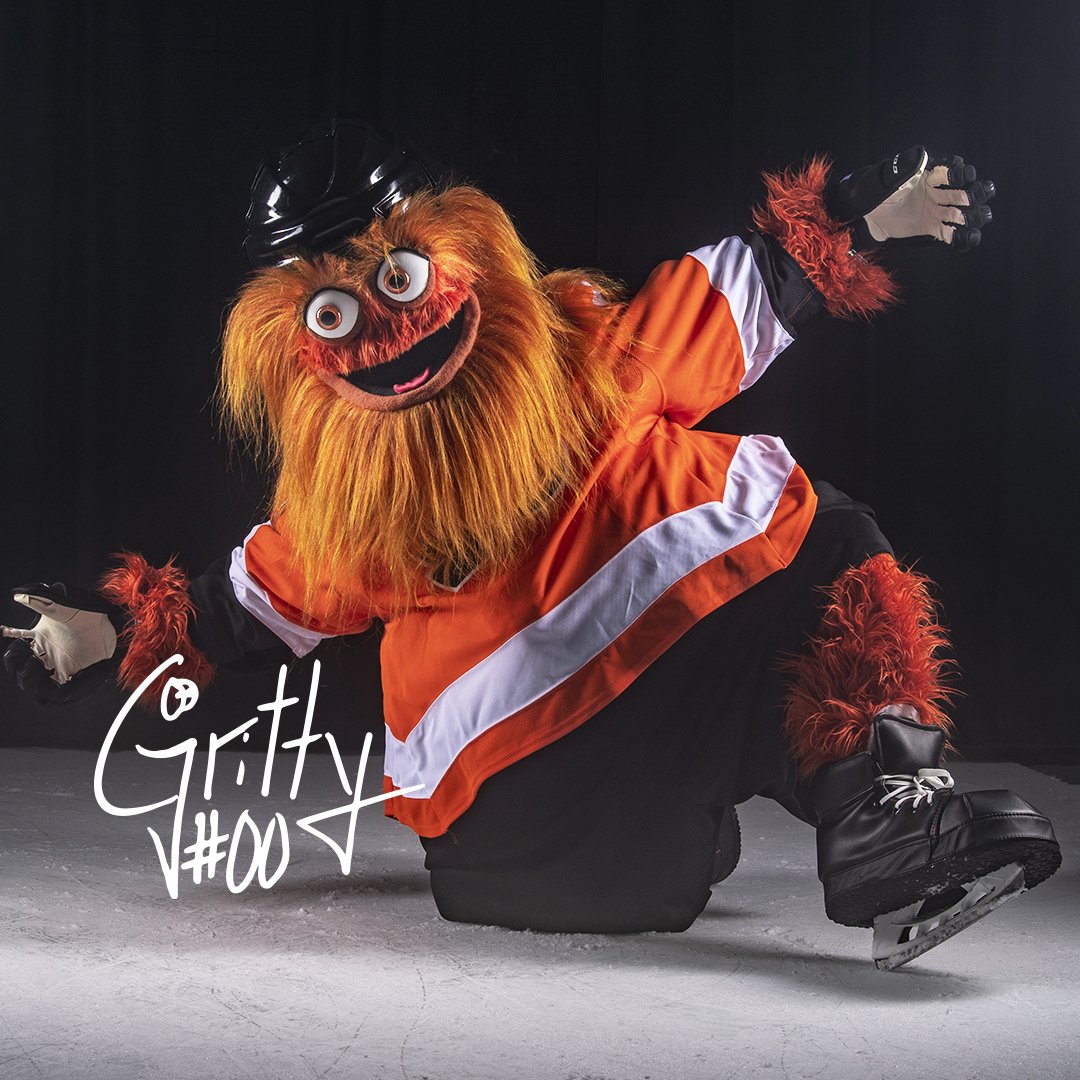
I remember that morning in late September, when I had another iPhone placed in front of my face to show me the Philadelphia Flyers' new mascot. In a terrified way, I yelled. But because of the initial reception of the big, orange furball, as well as the handling of his social media account, he became hosuehold name not only in the Philly area, but all over the flipping country. From wanting to be the "Person of the Year" for Time Magazine, to getting called out by Bailey the LA Kings Bear, he has the look and the attitude where people are going to remember him.
This is what makes mascots great, especially in the current days of social media. Not only are they still "good luck charms," but they're also a kind of "spokesperson" for the team. They are the prime representatives of a brand. They're also representative of the fans. They show how much heart the fans have, as well as the types of people they represent. There's lightheartedness, there's storytelling, such as how Teddy Roosevelt struggled to win a President's Race at RFK/Nationals Park for a number of years, and there's even competition among rival mascots as well.
Mascots are the extended arm for the team and their fans.
Except if you're Tommy Lasorda. Then they're just nuisances.
The presence of a mascot can greatly enhance the entertainment factor of a game. It doesn't always take much for them to fire up fans with their quirks, and when they get going, it's usually at the best time possible. One thing's for sure, I'm glad that they did away with the olden times of using uniformed kids and real animals to get the crowd into it. Reading about it now, it made sense at that time, but the idea definitely didn't age well, and it would be rather creepy if that held up today.
You'd best believe that when the team energy and the fan momentum falters, the mascots will be there to save you and your sanity.
-- Stephanie
___________________
Other articles referenced:
[1] Marketing to Children Overview - Campaign for a Commercial-Free Childhood - https://commercialfreechildhood.org/resource/marketing-children-overview
[2] Who - Or What - Was the First Sports Mascot and How Did the Practice Start? - Today I Found Out - http://www.todayifoundout.com/index.php/2016/09/first-sports-mascot/
To get started here, I'm going to throw down a statistic here that will aid in my explanation. Outside of sports, there is a huge fact about branding:
"Children ages 2-11 see more than 25,000 advertisements a year on TV alone ... a figure that does not include product placement. They are also targeted with advertising on the Internet, cell phones, mp3 players, video games, school buses, and in school." [1]
This statistic ultimately skyrockets as you age and expose yourself to more advertisements and branding. You think I'm deviating from the actual topic at hand, but I'm not. As a child, you're going to be exposed to a bunch of different things, and the more colorful and cartoonish they appear, the more appealing they'll be to kids, or the more they will induce nightmares. Even so, it makes them memorable.
The main idea you have to think of is this: when children are younger, and their parents or family members take them to games, aside from big-name players, who are they going to remember the most?
The mascots. The big furry buddies that show up during the games and pump up the fans.
What exactly is a mascot? Well, etymology can clear that up for us. The word comes from the French mascotte, ultimately meaning "charm" (the derivative term, mascoto, means witch, but anyway...). In the very early days of baseball in the 1880's, different "charms," or mascots, took the form of children or real-life animals. No, now is not the time to assume the "Curse of the Billy Goat" originated from this kind of mascot, as that's a completely different story.
By the MLB expansion in the 1960's, mascots became more plentiful, as Mr. Met made an appearance, the San Diego Chicken began his legacy, and the Phillie Phanatic hatched his way into the hearts of fans and haters alike. [2]
Professional team mascots are huge instruments in an organization's humanitarian work and their public relations outside of sporting events. They're animated due to their inability to speak, and their warm and fuzzy exterior is usually enough to bring a lighthearted feel to the room they walk into. They may not be actual superheroes, but they're larger-than-life figures that breathe, eat, and sleep energy. Actions speak louder than words, after all. While their purpose is not to convert people to be fans of a particular sport, they're there for physical support as well as giving brand awareness to those to support other causes in their area.
There aren't just mascots at the professional level, but they also exist in high school and college environments. A number of them do crazy stunts during breaks, and they also make appearances at school functions to promote their branding and appeal to other audiences. It usually isn't at the same level as professional mascots, but they're still there for similar reasons.
I was a mascot once for a parade, and it was fun. Like, really, really fun. The kids LOVED me.
 | ||
| This was back in 2008. I missed the NLDS clincher between the Phillies and Brewers that day. |
 |
| Photo from Twitter @GrittyNHL - Photo URL: https://pbs.twimg.com/media/Dn3mx-bXUAInf87.jpg |
I remember that morning in late September, when I had another iPhone placed in front of my face to show me the Philadelphia Flyers' new mascot. In a terrified way, I yelled. But because of the initial reception of the big, orange furball, as well as the handling of his social media account, he became hosuehold name not only in the Philly area, but all over the flipping country. From wanting to be the "Person of the Year" for Time Magazine, to getting called out by Bailey the LA Kings Bear, he has the look and the attitude where people are going to remember him.
This is what makes mascots great, especially in the current days of social media. Not only are they still "good luck charms," but they're also a kind of "spokesperson" for the team. They are the prime representatives of a brand. They're also representative of the fans. They show how much heart the fans have, as well as the types of people they represent. There's lightheartedness, there's storytelling, such as how Teddy Roosevelt struggled to win a President's Race at RFK/Nationals Park for a number of years, and there's even competition among rival mascots as well.
Mascots are the extended arm for the team and their fans.
Except if you're Tommy Lasorda. Then they're just nuisances.
The presence of a mascot can greatly enhance the entertainment factor of a game. It doesn't always take much for them to fire up fans with their quirks, and when they get going, it's usually at the best time possible. One thing's for sure, I'm glad that they did away with the olden times of using uniformed kids and real animals to get the crowd into it. Reading about it now, it made sense at that time, but the idea definitely didn't age well, and it would be rather creepy if that held up today.
You'd best believe that when the team energy and the fan momentum falters, the mascots will be there to save you and your sanity.
-- Stephanie
___________________
Other articles referenced:
[1] Marketing to Children Overview - Campaign for a Commercial-Free Childhood - https://commercialfreechildhood.org/resource/marketing-children-overview
[2] Who - Or What - Was the First Sports Mascot and How Did the Practice Start? - Today I Found Out - http://www.todayifoundout.com/index.php/2016/09/first-sports-mascot/
Wednesday, March 27, 2019
The Long, Long, Long, Long Journey to October
I love baseball as much as the next person. But as I'm getting older, there's a difference between endurance and overkill.
Here it is, lovely people. As of this posting, we are about 24 hours away from Opening Day for the 2019 MLB season. Blockbuster signings have happened in the offseason, knees have literally exploded, and foolish attempts to shorten the length of the game have run rampant once again.
Regardless of whether you're looking forward to the season or not, you're willing to wonder how long it takes before people begin to lose interest and start thinking about other sports again. After all, the NFL draft is coming up in a few weeks, and we're on the heels of the playoffs for both the NBA and NHL. It isn't that the game has become boring, per se, but in my older age, I will admit that the season has become quite long. As I mentioned in my previous post, there's always a guarantee that I'll have something to watch on TV when I'm not working, and I'm perfectly down with that.
But after a while, you tend to ask yourself, "Why?"
Even in the early days of baseball, up until the increase of teams in the 1960's, there were still upwards of 150 games played, as each team played their divisional opponents 22 times per season. [1] It sounds crazy, but the game was also much different back then. In those days, it was rather common to see pitchers tossing the entire game, and the quality of the equipment definitely made a difference, especially in the offensive department. Today, it's all about stats, performance, and the pace of the game.
One thing we've forgotten though, is that while those final points above are important, the human body, while it can do incredible things, is still a vessel that needs care, as the quality of it can decline as time progresses. Not every player on the 25-man roster can play all 162 games in a season. In fact, it's very rare. There are cases in which a player is placed on the disabled list from anywhere between 7 days (usually for concussions) or up to 60 for muscle strains or broken bones. You could be conditioned and be in the best physical shape possible, but freak accidents can still happen, and longevity can be placed at risk in a game like this. Plus, a mini-paternity leave has also been implemented in the league within the past few years, which honestly, that's pretty cool, and I'm a huge fan of that.
From a mentality standpoint not only from the players, but from the fans, eight months of being on the road and having to keep focus in a strategy-centric sport can be rather taxing. Is it really that important to play so much? Sure, there are players that go south of the US and play in the winter leagues to keep in form, but those games usually aren't as demanding and as crucial to the business in which they ultimately pledge allegiance to. While it may be a lifestyle, it has gotten to the point where we're losing interest because there's too much stimulation.
Hear me out.
You stand in front of a free cookie vending machine, and when you press the big blue button, a cookie comes popping out. Woohoo! Free cookie! Whenever you want more, you keep pressing the button. More cookies! Then, from pressing it so hard and so often, the button breaks, and cookies just keep coming out. You're going to get awfully tired of seeing all of the cookies flying out, and there is no way on this green earth that you're going to eat all of them without making yourself sick or near death.
This is Major League Baseball.
The button is broken.
There's too much of the game for consumption, and most fans are just tired of it.
Instead of shortening the length of the game itself, the marketing of the game and its players needs to change for sure. You can read my previous post about that below [but finish reading this one first]. Most of all, it should start being considered by Mr. Manfred and company that we just might not need as many games in the season anymore. We can find other ways to shorten the game. They're not going to be the easiest to pull off, but it might end up being more profitable in the end.
--
Here are a couple of suggestions to how this whole "shortening" business can be implemented in a much simpler way:
1) Eliminating multiple series with non-divisional opponents.
You'll notice that in the NFL, you don't play every single team in the league. Not only that, if they're not in your division, you won't play a given team more than once. For example, if you're the New Orleans Saints and you're playing the LA Rams--wait, I think I just rehashed some semi-healed wounds there, Who Dat Nation, my bad--you're either going to play them at the Superdome in the Bayou, or you're going out west to the LA Coliseum. You don't need anything more than that. If you're the St. Louis Cardinals, there's no reason you need to play the Miami Marlins both at home and in Florida. If you take away a lot of those extra series, and decide whether a non-divisional team plays home or away in a particular series, that easily shaves off about 50 games right off the bat (no pun intended).
2) Doing away with two-game and four-game series.
The two-game series are a fairly new thing in Major League Baseball, but four-game series have been a thing in the majors for a long while. If the first reason is enforced, there is less of a chance to split hairs in series records, and there is less travel involved when there is a two-game series.
This can probably be done without having to shorten the season at all. Rescheduling is all that really needs to be done here.
3) Reduce Spring Training.
I'm willing to bet that there are a number of people that are in agreement over this. Considering how long Spring Training is, it's a lot more endurance required by players at the Major League level to stay at top form. Sure, this will reduce the chance of minor league players making the 40-man roster, or it will add a little more strain to the decision-making process of the coaching staff, but how many games do you really need to know that you have the team that you need to play healthy and consistently for the next six months?
--
With all of those points noted, there is a serious backup that could definitely prevent this idea of a shorter season ever happening, and when it hit me after filling out all of those points above, my jaw did this kind of existential drop where everything went into slow motion and I saw these nuclear explosions all around me. This song was also playing, too.
PER MY LAST POST:
Remember how massive those player contracts were?
It doesn't stop there.
Say, for instance, that the season was reduced to 110 games, give or take a few. This would ultimately lead to higher ticket prices and higher prices in concessions since the ballparks have to make more business than usual (Note: I have a personal experience with the current insanity, as it was crazy enough that I drank a 16oz Miller Light can that cost $9 at Citizens' Bank Park last August, and a chicken sandwich by itself was $7.) Instead of "going to the ballpark on a whim" being a choice, it'll become more of a hard decision. If you're also eating on top of buying a ticket to the game--remember, you can't bring things in anymore--you're going to be shelling out more cash. This would be exponentially worse if the amount of home games are shortened for your team.
Granted, if you already incorporate the idea of the overall cost of a family of four going to a ballgame in some places, you figure:
Don't forget souvenirs, too!
(Note: Prices are ultimately going to vary on region. Prices in the California ballparks will obviously vary from ballparks in New York, and so on and so forth.) [2]
The gift of American financial inflation doesn't exactly do us any good. Back in the 80's and 90's, you could make a day at the ballpark and not have to spend much. Today, you have to plan a day at the ballpark and budget the day as if it's a vacation. You can't have this as a luxury; it falls into the same track as NFL games, concerts, or other sporting events.
Think about it--there are about 80 home games every season, and the ticket and concessions rates run about the same as concerts and NFL games, and there are only eight or nine home NFL games every season.

Imagine how much more of an impact a shorter baseball season would come down upon the fans and the wallets. It would be massive.
What kind of monster have we created here?
Due to the business that is being run today, it's hard to reduce a season, and what we have right now is what we have to keep. It's like trying to take ingredients out of a mixture when they've already been mixed in. Is it detrimental to the players and teams as a whole? We haven't seen a lot of that, but you also have to wonder about the teams that haven't been contenders in the last couple of seasons, and what it's going to take for them to get their fanbase back. It's something that owners and the like have to consider, especially when it's a long season, and they need people to watch the games in order to keep their team running.
Well, nuts.
I hate it when I run into self-made roadblocks while trying to make a point of conversation.
I guess for me that this is going to be a very long journey to October.
I just hope you're well-hydrated and strapped in. It's time for 2,430 games in the next six months.
-- Stephanie
___________________
Other articles referenced:
[1] Why 162 Games? - The Sports Historian - https://www.thesportshistorian.com/why-162-games/#
[2] The 7 most and least expensive stadiums to watch a Major League Baseball game - CBS News - https://www.cbsnews.com/media/the-7-most-and-least-expensive-stadiums-to-watch-a-major-league-baseball-game/2/
Here it is, lovely people. As of this posting, we are about 24 hours away from Opening Day for the 2019 MLB season. Blockbuster signings have happened in the offseason, knees have literally exploded, and foolish attempts to shorten the length of the game have run rampant once again.
Regardless of whether you're looking forward to the season or not, you're willing to wonder how long it takes before people begin to lose interest and start thinking about other sports again. After all, the NFL draft is coming up in a few weeks, and we're on the heels of the playoffs for both the NBA and NHL. It isn't that the game has become boring, per se, but in my older age, I will admit that the season has become quite long. As I mentioned in my previous post, there's always a guarantee that I'll have something to watch on TV when I'm not working, and I'm perfectly down with that.
But after a while, you tend to ask yourself, "Why?"
Even in the early days of baseball, up until the increase of teams in the 1960's, there were still upwards of 150 games played, as each team played their divisional opponents 22 times per season. [1] It sounds crazy, but the game was also much different back then. In those days, it was rather common to see pitchers tossing the entire game, and the quality of the equipment definitely made a difference, especially in the offensive department. Today, it's all about stats, performance, and the pace of the game.
One thing we've forgotten though, is that while those final points above are important, the human body, while it can do incredible things, is still a vessel that needs care, as the quality of it can decline as time progresses. Not every player on the 25-man roster can play all 162 games in a season. In fact, it's very rare. There are cases in which a player is placed on the disabled list from anywhere between 7 days (usually for concussions) or up to 60 for muscle strains or broken bones. You could be conditioned and be in the best physical shape possible, but freak accidents can still happen, and longevity can be placed at risk in a game like this. Plus, a mini-paternity leave has also been implemented in the league within the past few years, which honestly, that's pretty cool, and I'm a huge fan of that.
From a mentality standpoint not only from the players, but from the fans, eight months of being on the road and having to keep focus in a strategy-centric sport can be rather taxing. Is it really that important to play so much? Sure, there are players that go south of the US and play in the winter leagues to keep in form, but those games usually aren't as demanding and as crucial to the business in which they ultimately pledge allegiance to. While it may be a lifestyle, it has gotten to the point where we're losing interest because there's too much stimulation.
Hear me out.
You stand in front of a free cookie vending machine, and when you press the big blue button, a cookie comes popping out. Woohoo! Free cookie! Whenever you want more, you keep pressing the button. More cookies! Then, from pressing it so hard and so often, the button breaks, and cookies just keep coming out. You're going to get awfully tired of seeing all of the cookies flying out, and there is no way on this green earth that you're going to eat all of them without making yourself sick or near death.
This is Major League Baseball.
The button is broken.
There's too much of the game for consumption, and most fans are just tired of it.
Instead of shortening the length of the game itself, the marketing of the game and its players needs to change for sure. You can read my previous post about that below [but finish reading this one first]. Most of all, it should start being considered by Mr. Manfred and company that we just might not need as many games in the season anymore. We can find other ways to shorten the game. They're not going to be the easiest to pull off, but it might end up being more profitable in the end.
--
Here are a couple of suggestions to how this whole "shortening" business can be implemented in a much simpler way:
1) Eliminating multiple series with non-divisional opponents.
You'll notice that in the NFL, you don't play every single team in the league. Not only that, if they're not in your division, you won't play a given team more than once. For example, if you're the New Orleans Saints and you're playing the LA Rams--wait, I think I just rehashed some semi-healed wounds there, Who Dat Nation, my bad--you're either going to play them at the Superdome in the Bayou, or you're going out west to the LA Coliseum. You don't need anything more than that. If you're the St. Louis Cardinals, there's no reason you need to play the Miami Marlins both at home and in Florida. If you take away a lot of those extra series, and decide whether a non-divisional team plays home or away in a particular series, that easily shaves off about 50 games right off the bat (no pun intended).
2) Doing away with two-game and four-game series.
The two-game series are a fairly new thing in Major League Baseball, but four-game series have been a thing in the majors for a long while. If the first reason is enforced, there is less of a chance to split hairs in series records, and there is less travel involved when there is a two-game series.
This can probably be done without having to shorten the season at all. Rescheduling is all that really needs to be done here.
3) Reduce Spring Training.
I'm willing to bet that there are a number of people that are in agreement over this. Considering how long Spring Training is, it's a lot more endurance required by players at the Major League level to stay at top form. Sure, this will reduce the chance of minor league players making the 40-man roster, or it will add a little more strain to the decision-making process of the coaching staff, but how many games do you really need to know that you have the team that you need to play healthy and consistently for the next six months?
--
With all of those points noted, there is a serious backup that could definitely prevent this idea of a shorter season ever happening, and when it hit me after filling out all of those points above, my jaw did this kind of existential drop where everything went into slow motion and I saw these nuclear explosions all around me. This song was also playing, too.
PER MY LAST POST:
Remember how massive those player contracts were?
It doesn't stop there.
Say, for instance, that the season was reduced to 110 games, give or take a few. This would ultimately lead to higher ticket prices and higher prices in concessions since the ballparks have to make more business than usual (Note: I have a personal experience with the current insanity, as it was crazy enough that I drank a 16oz Miller Light can that cost $9 at Citizens' Bank Park last August, and a chicken sandwich by itself was $7.) Instead of "going to the ballpark on a whim" being a choice, it'll become more of a hard decision. If you're also eating on top of buying a ticket to the game--remember, you can't bring things in anymore--you're going to be shelling out more cash. This would be exponentially worse if the amount of home games are shortened for your team.
Granted, if you already incorporate the idea of the overall cost of a family of four going to a ballgame in some places, you figure:
- Average price of cheap seats in a Major League ballpark: ranging anywhere from $20-$40
- Average price of parking: anywhere from $10 to $30
- Average price of a full meal and drink: Meal could be upwards of $10 per person, plus $2-$5 extra for a drink
Don't forget souvenirs, too!
(Note: Prices are ultimately going to vary on region. Prices in the California ballparks will obviously vary from ballparks in New York, and so on and so forth.) [2]
The gift of American financial inflation doesn't exactly do us any good. Back in the 80's and 90's, you could make a day at the ballpark and not have to spend much. Today, you have to plan a day at the ballpark and budget the day as if it's a vacation. You can't have this as a luxury; it falls into the same track as NFL games, concerts, or other sporting events.
Think about it--there are about 80 home games every season, and the ticket and concessions rates run about the same as concerts and NFL games, and there are only eight or nine home NFL games every season.

Imagine how much more of an impact a shorter baseball season would come down upon the fans and the wallets. It would be massive.
What kind of monster have we created here?
Due to the business that is being run today, it's hard to reduce a season, and what we have right now is what we have to keep. It's like trying to take ingredients out of a mixture when they've already been mixed in. Is it detrimental to the players and teams as a whole? We haven't seen a lot of that, but you also have to wonder about the teams that haven't been contenders in the last couple of seasons, and what it's going to take for them to get their fanbase back. It's something that owners and the like have to consider, especially when it's a long season, and they need people to watch the games in order to keep their team running.
Well, nuts.
I hate it when I run into self-made roadblocks while trying to make a point of conversation.
I guess for me that this is going to be a very long journey to October.
I just hope you're well-hydrated and strapped in. It's time for 2,430 games in the next six months.
-- Stephanie
___________________
Other articles referenced:
[1] Why 162 Games? - The Sports Historian - https://www.thesportshistorian.com/why-162-games/#
[2] The 7 most and least expensive stadiums to watch a Major League Baseball game - CBS News - https://www.cbsnews.com/media/the-7-most-and-least-expensive-stadiums-to-watch-a-major-league-baseball-game/2/
Friday, March 22, 2019
Major League Baseball's Identity Crisis
Your eyes aren't deceiving you. It's been well over two years since I've written in this blog. Not too long after I wrote the last post, a short film happened. Then my faithful laptop of ten years died last summer. They aren't excuses. I had a good time, and some crises happened. But I feel like I need to write in here once more.
As I take a sip of ChocoVine and put my fingers to these keys, another baseball season is finally upon us, and my wardrobe changes to adjust to that. It's the time of year where I actually have something to either watch on television every single night, or listen to a broadcast on the radio. The football season has become that for me, and that isn't because the Eagles actually won a Super Bowl in the time I haven't written in here. I digress on that point.
Yesterday morning, we all witnessed a storybook retirement for one Ichiro Suzuki, as he gave his thank yous and waved his goodbyes in front of a Japanese crowd during the eighth inning against the Oakland A's during their Japan series. It was pretty amazing, and it felt like a piece of my childhood was ending. Although he didn't ever experience a World Series (the Mariners totally could have if the Yankees hadn't prevented that in 2001), he was still a master class in the batter's box, and was always a class act on and off the field.
I'm going to miss him, but not for the reason that you would think.
For the last five or six years, it hasn't come as any surprise that general interest in baseball hasn't been as strong as it has in years past. I can say that I fell into that category, and it wasn't because the Phillies started tanking and their dynasty died a fiery death. Mr. Manfred over in MLB's headquarters think that general loss of interest is because the average time of a game is too long. Funny, that was the exact thing I complained about in my last post two years ago. Here we are, still dealing with it after all of this time.
Even if you don't have a marketing or a public relations degree, it shouldn't be that hard to see that MLB's identity crisis goes way beyond keeping millennials seated in a folding chair for more than three hours.
It has everything to do with the marketing of the players. It has literally become a lost art, and it absolutely burns in every open wound and welt from a slide and hit-by-pitch.
When you watch a sport, you really should know the other teams involved, and know what kind of special players exist in the league to keep things fresh. My favorite thing to do in the last two years have been to ask people who aren't the absolute biggest baseball fans to name five big MLB players that aren't even on their own team. The two most common I had gotten were Mike Trout and Bryce Harper, and then I'd get names of guys that have long since retired.
General interest in ballplayers reached a head in mainstream news, not because they were good or because they were under the gavel of the law due to domestic abuse, but because they were receiving the biggest contracts ever administered in the history of sports. When Alex Rodriguez signed his ten-year, $275 million deal with the New York Yankees in 2007, that kind of contract was unheard of.
Now, twelve years later, we have:
If you took a look at the highest-paid athletes in the world, SIXTEEN of the Top-20 paid athletes in the world are MLB players (three of the remaining four are NBA players, and the other is a boxer, which is really uncanny).
If you're pumping out this much money to have your talent, why on this green earth are they not getting marketed properly?!
I'd like to provide the largest example of how it isn't happening at all.
Remember this commercial?
LEBRON JAMES IS ON THE MOUND. HE IS A BASKETBALL PLAYER.
Why don't you have someone like Clayton Kershaw or Max Scherzer do it?
The lack of marketing and endorsement deals that baseball players have received have been slim to none, and when your biggest marketing effort is Little League, Nike, and New Balance, there's a serious problem. A 2016 article from the International Business Times attributes it to the idea that players are on the road for so many days of the year, and a 162-game schedule isn't ideal to promote a brand or ensure brand loyalty. [1] Now, when you throw this into the conversation, there's obviously one of two things wrong with this: (1) It's a lame excuse, because I remember seeing big-name players in advertising in the late-90's and early-2000's during the MLB season, and (2) It's becoming painfully evident that it isn't the length of a single game, but the length of the season as a whole has finally become too much for the average consumer.
(At some point, I'll write about how the 162-game season should go the way of the dinosaur. I think it'll be great writing therapy for a now-disgruntled sports fan like myself.)
When it comes to marketing the player, the main goal doesn't become brand loyalty to the product their endorsing, but becoming the face of the league in which they play. It has been stated year in and year out that guys like Mike Trout don't want that attention, and he's arguably one of the hottest names in baseball today. So, that being said, who is willing to grab that brass ring and keep the game alive? It goes beyond skill and longevity today. It's all about image and identity.
Okay, so the biggest argument I have going against me on this one is the fact that baseball 20-25 years prior was more than just table conversation and player marketing. The game was so much more different before the steroid scandals, because some of the feats achieved were superhero-like. The drama behind each game was like watching Attitude Era WWE wondering what was going to happen on this week's edition on "This Week In Baseball." It wasn't an overly proud time in baseball, but seeing what was going to happen in the home run wars was must-see TV.
This doesn't poo-poo the fact that watching impressive pitching performances in today's game isn't so at all, but the implementation of sabermetrics and the need for hard-hitting action in the game in a short amount of time is the figurative equivalent of steroids in the 1990's. Strength is good, but longevity and brandworthy moments are important to the growth of the game.
Give them a reason to keep returning to the stadium and the TV sets, not a reason to walk away from the stadium and the TVs faster.
I end this post with asking Kyler Murray this one question: How do you like waiting for the NFL draft knowing you missed out on a massive payday?
-- Stephanie
___________________
Other articles referenced:
[1] MLB Stars Get Massive Contracts But Few Endorsements. Here's Why. - International Business Times - https://www.ibtimes.com/mlb-stars-get-massive-contracts-few-endorsements-heres-why-2348181
As I take a sip of ChocoVine and put my fingers to these keys, another baseball season is finally upon us, and my wardrobe changes to adjust to that. It's the time of year where I actually have something to either watch on television every single night, or listen to a broadcast on the radio. The football season has become that for me, and that isn't because the Eagles actually won a Super Bowl in the time I haven't written in here. I digress on that point.
Yesterday morning, we all witnessed a storybook retirement for one Ichiro Suzuki, as he gave his thank yous and waved his goodbyes in front of a Japanese crowd during the eighth inning against the Oakland A's during their Japan series. It was pretty amazing, and it felt like a piece of my childhood was ending. Although he didn't ever experience a World Series (the Mariners totally could have if the Yankees hadn't prevented that in 2001), he was still a master class in the batter's box, and was always a class act on and off the field.
I'm going to miss him, but not for the reason that you would think.
For the last five or six years, it hasn't come as any surprise that general interest in baseball hasn't been as strong as it has in years past. I can say that I fell into that category, and it wasn't because the Phillies started tanking and their dynasty died a fiery death. Mr. Manfred over in MLB's headquarters think that general loss of interest is because the average time of a game is too long. Funny, that was the exact thing I complained about in my last post two years ago. Here we are, still dealing with it after all of this time.
Even if you don't have a marketing or a public relations degree, it shouldn't be that hard to see that MLB's identity crisis goes way beyond keeping millennials seated in a folding chair for more than three hours.
It has everything to do with the marketing of the players. It has literally become a lost art, and it absolutely burns in every open wound and welt from a slide and hit-by-pitch.
When you watch a sport, you really should know the other teams involved, and know what kind of special players exist in the league to keep things fresh. My favorite thing to do in the last two years have been to ask people who aren't the absolute biggest baseball fans to name five big MLB players that aren't even on their own team. The two most common I had gotten were Mike Trout and Bryce Harper, and then I'd get names of guys that have long since retired.
General interest in ballplayers reached a head in mainstream news, not because they were good or because they were under the gavel of the law due to domestic abuse, but because they were receiving the biggest contracts ever administered in the history of sports. When Alex Rodriguez signed his ten-year, $275 million deal with the New York Yankees in 2007, that kind of contract was unheard of.
Now, twelve years later, we have:
- Nolan Arenado of the Rockies with an eight-year, $260 million deal
- Manny Machado of the Padres with a ten-year, $300 million contract
- Bryce Harper of the Phillies with a thirteen-year, $330 million deal
- Mike Trout of the Angels with a twelve-year, wait for it, $426.5 million contract
If you took a look at the highest-paid athletes in the world, SIXTEEN of the Top-20 paid athletes in the world are MLB players (three of the remaining four are NBA players, and the other is a boxer, which is really uncanny).
If you're pumping out this much money to have your talent, why on this green earth are they not getting marketed properly?!
I'd like to provide the largest example of how it isn't happening at all.
Remember this commercial?
LEBRON JAMES IS ON THE MOUND. HE IS A BASKETBALL PLAYER.
Why don't you have someone like Clayton Kershaw or Max Scherzer do it?
The lack of marketing and endorsement deals that baseball players have received have been slim to none, and when your biggest marketing effort is Little League, Nike, and New Balance, there's a serious problem. A 2016 article from the International Business Times attributes it to the idea that players are on the road for so many days of the year, and a 162-game schedule isn't ideal to promote a brand or ensure brand loyalty. [1] Now, when you throw this into the conversation, there's obviously one of two things wrong with this: (1) It's a lame excuse, because I remember seeing big-name players in advertising in the late-90's and early-2000's during the MLB season, and (2) It's becoming painfully evident that it isn't the length of a single game, but the length of the season as a whole has finally become too much for the average consumer.
(At some point, I'll write about how the 162-game season should go the way of the dinosaur. I think it'll be great writing therapy for a now-disgruntled sports fan like myself.)
When it comes to marketing the player, the main goal doesn't become brand loyalty to the product their endorsing, but becoming the face of the league in which they play. It has been stated year in and year out that guys like Mike Trout don't want that attention, and he's arguably one of the hottest names in baseball today. So, that being said, who is willing to grab that brass ring and keep the game alive? It goes beyond skill and longevity today. It's all about image and identity.
Okay, so the biggest argument I have going against me on this one is the fact that baseball 20-25 years prior was more than just table conversation and player marketing. The game was so much more different before the steroid scandals, because some of the feats achieved were superhero-like. The drama behind each game was like watching Attitude Era WWE wondering what was going to happen on this week's edition on "This Week In Baseball." It wasn't an overly proud time in baseball, but seeing what was going to happen in the home run wars was must-see TV.
This doesn't poo-poo the fact that watching impressive pitching performances in today's game isn't so at all, but the implementation of sabermetrics and the need for hard-hitting action in the game in a short amount of time is the figurative equivalent of steroids in the 1990's. Strength is good, but longevity and brandworthy moments are important to the growth of the game.
Give them a reason to keep returning to the stadium and the TV sets, not a reason to walk away from the stadium and the TVs faster.
I end this post with asking Kyler Murray this one question: How do you like waiting for the NFL draft knowing you missed out on a massive payday?
-- Stephanie
___________________
Other articles referenced:
[1] MLB Stars Get Massive Contracts But Few Endorsements. Here's Why. - International Business Times - https://www.ibtimes.com/mlb-stars-get-massive-contracts-few-endorsements-heres-why-2348181
Tuesday, February 21, 2017
Cutting to the (Literal) Chase
I understand that this is only my third post since the sixth anniversary of The Sports Nut Blogs, but much like any child or old friend, I must acknowledge the special day. Happy Seventh Birthday, dearest blog.
Last week, I heard a bit of stirring from the realm of baseball. After all, pitchers and catchers reported last week, with full squads working out as early as this weekend. Yeah, that's all well and good. We're used to that kind of stuff.
But that isn't what I'm writing about right now.
As most of us should know, this is the second full season with Rob Manfred as commissioner of Major League Baseball. Much like any leader before him, we tend to wonder what kind of ideas and suggestions he'll bring to the table. Considering how Bud Selig twisted the game a lot in 25-some-odd years, such as adding the Wild Card and helping birth the implementation of instant replay, he has had a lot expected of him. It's like we're asking the question: "What will the President of the United States do within his first 100 days?" Now that his feet are completely immersed--not just simply wet--in commish matters, we're starting to see a couple of "pitches," so to speak. [This pun was unplanned.]
This little number is causing a ton of commotion all over the sport and in baseball talks around town. If you've been living under a rock, it's a proposed regulation that will alter the rules of a game in extra innings. In my 26 years of life, I have experienced a ton of extra innings games. The longest one I can remember was 20 innings, and at least three position players had to pitch during the game. It was one of those games where I thanked baseball Twitter for helping me out and letting me know what was going on when my MLB feed cut out. While it's considered "free baseball" for all of the fans, it's oftentimes seen as the worst case scenario for any baseball team. It's where strategy really comes into play, especially when your bullpen is on the verge of total burnout. No team wants that, especially if they're smack-dab in the middle of a ten-game road trip, and their next day off isn't for another three days or so. But you have to get that W, right? You have to get it in any way possible.
In the chess-like structure of baseball, there are very few ways that you can curb the course of the game. However, this is what the rule would be:
In an extra inning game, both teams will begin their half of the inning with a runner on second base. This practice continues until there is a definitive winner at the bottom half of the inning.

There have been moves over the past few years to pick up the pace of each game, going so far as to giving the pitcher a time limit to set up, communicate with the catcher, and make his stretch. Of course, it's one step forward and two steps back, considering the almighty instant replay rule happens--sometimes more than once in a game--and the communication from New York and the final ruling itself can take anywhere from three to five minutes. You know who else encounters that same problem? The NFL, and with the clock-running tactics and everything else, there is only really 15 minutes of real gameplay within a three-hour broadcast of the game. Okay, there are only three days out of the week when there are games in the NFL as opposed to just about every day for baseball, but still, who's really losing out here?
You can't place the entire blame of pacing on extra innings, either. Sure, there were "record setting numbers" of the amount of extra innings games played during the regular season in 2013, but according to a Chicago Tribune article originally from the Washington Post, out of the 2,428 combined games played during the 2016 season, only 185 of those games went to extras, and 122 of those 185 games went to either ten or eleven innings. [SOURCE] In 2013, that number was 239.
From a CBS Sports article:
I got to thinking about this small point, but there probably won't be any significance about this particular matter. While the MLBPA isn't a fan of this proposal, there's a possible chance that the stadium staffs are going to be perfectly fine with this. Granted, I'm not 100% certain if they are granted overtime hours during extra inning games, but I know for a fact that working at the stadium isn't their only gig, and they may have to get up early the next day for their actual job. I don't know--they may not even be granted a say on this matter, because it looks like it will be full steam ahead on this rule.
There really isn't a way to test this outside of the regular season, either. Spring Training games will end in a tie after the ninth inning for obvious reasons, being that it's too early for that crap, and you don't want to tire out the promising new guys. As far as I've researched, I haven't been able to find an exhibition game (the games right before Opening Day at the main ballparks) that has gone beyond nine innings. If this proposal goes through and the extra innings rule is enforced come April, there is going to be some very loud and very obvious backlash from the crowds and maybe even the broadcast crews based on the discretion of their front offices.
As for me, I am heavily against this proposal. This isn't even me speaking from a purist perspective; I'm the type of person that enjoys the designated hitter rule in the American League only and not in both. Putting a runner on second base starting in the tenth inning is an obvious sign that the league wants to rush the game to its end. I can understand why with the pacing, but you can't change your ways and immediately expect your target demographic to come rushing to you. This isn't Grease, where both Danny and Sandy have to completely change who they are to try and be liked by one another and their groups. Stop. Just be who you are and market your younger players and long-standing iron men that are bound to be legends. Geez, how did my generation get sucked into the game? Not the steroid scandal--I mean, of course, the whole Mark McGwire/Sammy Sosa thing was awesome, but I'm talking about Ken Griffey, Jr., Tony Gwynn, and Cal Ripken, Jr. Today, you've got guys like Mike Trout, Bryce Harper, and Noah Syndergaard that are bound to be in the Hall Of Fame someday if they stay healthy. Focus on the franchise guys. That will get the younger boys going.
At least...at least I think so.
-- Stephanie
Last week, I heard a bit of stirring from the realm of baseball. After all, pitchers and catchers reported last week, with full squads working out as early as this weekend. Yeah, that's all well and good. We're used to that kind of stuff.
But that isn't what I'm writing about right now.
As most of us should know, this is the second full season with Rob Manfred as commissioner of Major League Baseball. Much like any leader before him, we tend to wonder what kind of ideas and suggestions he'll bring to the table. Considering how Bud Selig twisted the game a lot in 25-some-odd years, such as adding the Wild Card and helping birth the implementation of instant replay, he has had a lot expected of him. It's like we're asking the question: "What will the President of the United States do within his first 100 days?" Now that his feet are completely immersed--not just simply wet--in commish matters, we're starting to see a couple of "pitches," so to speak. [This pun was unplanned.]
This little number is causing a ton of commotion all over the sport and in baseball talks around town. If you've been living under a rock, it's a proposed regulation that will alter the rules of a game in extra innings. In my 26 years of life, I have experienced a ton of extra innings games. The longest one I can remember was 20 innings, and at least three position players had to pitch during the game. It was one of those games where I thanked baseball Twitter for helping me out and letting me know what was going on when my MLB feed cut out. While it's considered "free baseball" for all of the fans, it's oftentimes seen as the worst case scenario for any baseball team. It's where strategy really comes into play, especially when your bullpen is on the verge of total burnout. No team wants that, especially if they're smack-dab in the middle of a ten-game road trip, and their next day off isn't for another three days or so. But you have to get that W, right? You have to get it in any way possible.
In the chess-like structure of baseball, there are very few ways that you can curb the course of the game. However, this is what the rule would be:
In an extra inning game, both teams will begin their half of the inning with a runner on second base. This practice continues until there is a definitive winner at the bottom half of the inning.
(wrinkled face)

This honestly sounds like a rule you'd implement in a men's over-50 recreational softball league.
Could you imagine if they had this type of rule during Game 7 of the [Hell Has Frozen Over Because The Cubs Or Indians Could Win The] World Series? It wouldn't have been as fun. Sure, there would be a bit more tension, but it almost feels like you're cheating and rushing everybody out the door (you know what I mean). You may as well say: "Forget it! The game ends in a tie! You had your nine-inning fix!" I'm getting vibes similar to how NHL games would just end in a tie after a short overtime period before the shootout came after the 2004-2005 lockout. It feels exactly like that--forcing a winner.
During the game, it's as if you're putting on training wheels or a completely one-sided handicap on a team if they're not pushing hard enough to win decisively. Plus, this would also leave teams to decide if they want to place their fastest player in scoring position, thus affecting the lineup and fielding in either the bottom half of the inning or the possible next. It's like the flex player rule in softball, but used on a Major League scale in the event that "everybody has to have a role, but they're not going to bat or field."
The main reason for the proposal is that, according to a USA Today article, there is a need to attract the game to a younger audience, as the supposed average age to watch a TV broadcast is over 50. [SOURCE] Where that statistic came from, I'd really like to know. Does that make me 50 in spirit?
Anyway.
There have been moves over the past few years to pick up the pace of each game, going so far as to giving the pitcher a time limit to set up, communicate with the catcher, and make his stretch. Of course, it's one step forward and two steps back, considering the almighty instant replay rule happens--sometimes more than once in a game--and the communication from New York and the final ruling itself can take anywhere from three to five minutes. You know who else encounters that same problem? The NFL, and with the clock-running tactics and everything else, there is only really 15 minutes of real gameplay within a three-hour broadcast of the game. Okay, there are only three days out of the week when there are games in the NFL as opposed to just about every day for baseball, but still, who's really losing out here?

You can't place the entire blame of pacing on extra innings, either. Sure, there were "record setting numbers" of the amount of extra innings games played during the regular season in 2013, but according to a Chicago Tribune article originally from the Washington Post, out of the 2,428 combined games played during the 2016 season, only 185 of those games went to extras, and 122 of those 185 games went to either ten or eleven innings. [SOURCE] In 2013, that number was 239.
From a CBS Sports article:
"There have been 239 extra-inning games in Major League Baseball so far this season. In 2011, there were 237, which was the previous record-holder. Prior to that, the most games to head to extras in history in a season was 220, which was done in 1986, 1991, 2007 and 2010.So four of the top six extra-inning seasons in history have come in the last seven seasons" (Snyder, 2013).
Okay. I get that. However, there are also thirty teams in the league. Each team plays 180 games. That number is going to climb. However, the numbers have gone down considerably since then, and there shouldn't be any room for worry. To be honest, it sounds like we're chopping off our big toe to save our ailing eyesight.I got to thinking about this small point, but there probably won't be any significance about this particular matter. While the MLBPA isn't a fan of this proposal, there's a possible chance that the stadium staffs are going to be perfectly fine with this. Granted, I'm not 100% certain if they are granted overtime hours during extra inning games, but I know for a fact that working at the stadium isn't their only gig, and they may have to get up early the next day for their actual job. I don't know--they may not even be granted a say on this matter, because it looks like it will be full steam ahead on this rule.
There really isn't a way to test this outside of the regular season, either. Spring Training games will end in a tie after the ninth inning for obvious reasons, being that it's too early for that crap, and you don't want to tire out the promising new guys. As far as I've researched, I haven't been able to find an exhibition game (the games right before Opening Day at the main ballparks) that has gone beyond nine innings. If this proposal goes through and the extra innings rule is enforced come April, there is going to be some very loud and very obvious backlash from the crowds and maybe even the broadcast crews based on the discretion of their front offices.
As for me, I am heavily against this proposal. This isn't even me speaking from a purist perspective; I'm the type of person that enjoys the designated hitter rule in the American League only and not in both. Putting a runner on second base starting in the tenth inning is an obvious sign that the league wants to rush the game to its end. I can understand why with the pacing, but you can't change your ways and immediately expect your target demographic to come rushing to you. This isn't Grease, where both Danny and Sandy have to completely change who they are to try and be liked by one another and their groups. Stop. Just be who you are and market your younger players and long-standing iron men that are bound to be legends. Geez, how did my generation get sucked into the game? Not the steroid scandal--I mean, of course, the whole Mark McGwire/Sammy Sosa thing was awesome, but I'm talking about Ken Griffey, Jr., Tony Gwynn, and Cal Ripken, Jr. Today, you've got guys like Mike Trout, Bryce Harper, and Noah Syndergaard that are bound to be in the Hall Of Fame someday if they stay healthy. Focus on the franchise guys. That will get the younger boys going.
At least...at least I think so.
-- Stephanie
Sunday, February 5, 2017
That Large Game on Sunday: Go Big or Go Home
FADE IN
EXT. SOMEWHERE IN THE STICKS OF NEW JERSEY - MIDDAY
A rustic-colored Toyota comes into view. It pulls off the road slowly to a shoulder and turns off. The Hamsa Hand still swings in the rear-view mirror after a couple of seconds. The figure seated to the left does not move.
Suddenly, the driver-side door opens. Out steps a hooded FIGURE in a bright red winter coat with fur outlining the hood. The Figure pushes the door shut and looks around at the desolate land. Leaning against the vehicle, the Figure reaches into the coat pocket and pulls out a small piece of paper, which reads: "FEBRUARY 21, 2010 -- I CREATED A BLOG SO I COULD GET A JOB AS A SPORTS WRITER SOMEDAY."
The Figure lowers the coat hood, revealing a 26-year-old woman, who is staring deeply at a vacant lot with papers flying all around it. She narrows her eyes.
"I must rebuild."
I'm going to say the dreaded words and pray that I don't get slammed with a royalty fee for using it. I literally can't afford that.
It's the one day where everyone tries out their best attempts at indoor grilling, making elaborate dips, drinking as much cheap beer as possible, and most importantly, critiquing the types of advertisements that show up during this Game of Games. Channeling our inner Joel, Crow, and Tom Servo of Mystery Science Theater 3000 has become the norm, and to be honest, it's not a bad thing. It's become a way to bond.
Year in and year out, bathroom breaks are hard to come by, as the masses have been fed with either the catchphrases of the era...
...the most terrifying of...things...
...or super exciting previews for a show (suddenly getting canceled--lol The Good Wife) or a highly-anticipated movie coming out soon.
Over the years, it has become public knowledge about how disgustingly expensive it is to purchase thirty seconds of space for advertisement. Last year, it was reported that it will cost you $5 MILLION for a thirty second advertisement. Yes. Five million. In comes the joke where: "I will probably never see five million dollars in my lifetime, let alone thirty seconds." The only way that Super Bowl coordinators and producers have gotten away with doing this is for two main reasons: One, this is the one championship out of the Big Four that non-sports fans are more likely to watch--aka, "checking out the season finale of 'Sports'"--and two, this is the only sport of the Big Four that has a one-and-done championship final. C'mon, the latter is pure logic, but the one thing that fires up overall ratings are the advertisements that catch the attention of the viewers who don't even follow football. It's a marriage of agendas. Some will walk in, saying, "I want to see the new trailer for (insert movie here--probably Star Wars), so I have to sit and wait," or, "I need a reason to laugh and tweet," or, "OMG LUKE BRYAN'S BUTT IN JEANS. YAAAAS GAGA." Forgive me for typing that last one, but that's pure truth right there. Facebook and Twitter have become existent proof that everyone gets involved to some capacity in Super Bowl shenanigans.
That said... this is a Super Bowl itself for advertisement agencies and companies. Every year, they have to pull out all the stops and literally "go big or go home." We've seen some of the silliest advertisements coming from companies like Doritos, and we've also seen some extreme tearjerkers from companies like Budweiser. Depending on where you live, you'll also get some regional advertisements. In various regions last year, The Church Of Scientology shelled out some pennies to advertise for thirty seconds. Personally, I didn't see it, but according to Twitter at the time, it happened, and of course, I searched it out and found it. You'll also run into instances where companies bought out a bunch of ad space, but they only have one or two commercials to compensate for that. Oh, you know what I mean about the repeat commercials, and how they might not have even been any good to begin with, and how you'll have to either sit through them again or run to the bathroom and do your business in record time in order to not miss anything decent. Good times.
You'll also get the naysayers who claim: "You have all of this money to sponsor and advertise and product-place, and you can't place the money where it matters most?" To be fair, you're going to get those people everywhere, where they say the money should go toward more efficient means such as the education system. Okay, that's true. That's very, very true. The job market is not that great, and people aren't getting paid enough in full-time jobs to survive properly and be loan-free. I get that. But just like a game show, companies are firing their shots to win the biggest impact on the masses. It literally is an escape for viewers, and it's their job to be the more memorable brand. We're watching them do their job. Does that make us lazy? No. That's like saying we're horrible for celebrating Thanksgiving because of tortured turkeys and advertisements mentioning the holiday. Everybody acknowledges Super Bowl Sunday to some capacity, even though they may not particularly partake in it. That's just how today's culture and society is. You know it's there--it's all dependent on how much you ultimately consume. You could be on the outer circle, for all we know, but if you're a Lady Gaga fan, or you just happen to have plans with someone who's throwing a party, into the bullseye of the circle you go!
Advertising during any sporting event is a sport in itself. Sponsors are tacked onto just about any televised event or radio broadcast. It's the necessary evil that we must acknowledge. Oh, Pepsi is the sponsor? Bottles of 3/4 filled Pepsi have to be on the broadcast tables, because they have to be prominent, and it has to look like they've been consumed! The most obvious one for NFL broadcasts are Microsoft Surface Pro tablets being placed on the desks during the halftime and post-game reports and on the field by players to go over previous and future plays. You may be annoyed by it, or you may just blow it off and ignore the fact that the brand is everywhere. You're not a bad person for possibly having either thought toward it, but it isn't hard to ignore the fact that advertising has a pure death grip on the game itself--not just the athletes off of the field.
Seeing it from both ends, it's rather annoying. I'm still a sports fan, and I enjoy watching the game. But it is also irritating to see practices from the field I studied in college. It's white-collar warfare, while you get these pictures on your news feed:
It's the world that we live in, but morality, business, and pleasure are becoming way too heavily integrated into our society. We can't enjoy a game without getting flooded with ads. They say that children are exposed to at least 25,000 advertisements per year. Per. Year. [source for statistic] It's a business that has to squeeze in their products, all while shaping it to be pleasurable for adults and create a buzz for them to talk about it with others. I hate to sound like a social justice warrior here, but while advertising for a brand is all well and good, I'm pretty sure that the financial values are a bit ridiculous and that they're definitely not going into the right things. I digress on the matter.
This Sunday, it's going to be big. Not just for the athletes and fans, but for the big businesses and conglomerates. Which side will you be on? Where will you go big?
-- Stephanie
EXT. SOMEWHERE IN THE STICKS OF NEW JERSEY - MIDDAY
A rustic-colored Toyota comes into view. It pulls off the road slowly to a shoulder and turns off. The Hamsa Hand still swings in the rear-view mirror after a couple of seconds. The figure seated to the left does not move.
Suddenly, the driver-side door opens. Out steps a hooded FIGURE in a bright red winter coat with fur outlining the hood. The Figure pushes the door shut and looks around at the desolate land. Leaning against the vehicle, the Figure reaches into the coat pocket and pulls out a small piece of paper, which reads: "FEBRUARY 21, 2010 -- I CREATED A BLOG SO I COULD GET A JOB AS A SPORTS WRITER SOMEDAY."
The Figure lowers the coat hood, revealing a 26-year-old woman, who is staring deeply at a vacant lot with papers flying all around it. She narrows her eyes.
"I must rebuild."
I'm going to say the dreaded words and pray that I don't get slammed with a royalty fee for using it. I literally can't afford that.
(ahem) The Super Bowl.
It's the one day where everyone tries out their best attempts at indoor grilling, making elaborate dips, drinking as much cheap beer as possible, and most importantly, critiquing the types of advertisements that show up during this Game of Games. Channeling our inner Joel, Crow, and Tom Servo of Mystery Science Theater 3000 has become the norm, and to be honest, it's not a bad thing. It's become a way to bond.
Year in and year out, bathroom breaks are hard to come by, as the masses have been fed with either the catchphrases of the era...
...the most terrifying of...things...
...or super exciting previews for a show (suddenly getting canceled--lol The Good Wife) or a highly-anticipated movie coming out soon.
Over the years, it has become public knowledge about how disgustingly expensive it is to purchase thirty seconds of space for advertisement. Last year, it was reported that it will cost you $5 MILLION for a thirty second advertisement. Yes. Five million. In comes the joke where: "I will probably never see five million dollars in my lifetime, let alone thirty seconds." The only way that Super Bowl coordinators and producers have gotten away with doing this is for two main reasons: One, this is the one championship out of the Big Four that non-sports fans are more likely to watch--aka, "checking out the season finale of 'Sports'"--and two, this is the only sport of the Big Four that has a one-and-done championship final. C'mon, the latter is pure logic, but the one thing that fires up overall ratings are the advertisements that catch the attention of the viewers who don't even follow football. It's a marriage of agendas. Some will walk in, saying, "I want to see the new trailer for (insert movie here--probably Star Wars), so I have to sit and wait," or, "I need a reason to laugh and tweet," or, "OMG LUKE BRYAN'S BUTT IN JEANS. YAAAAS GAGA." Forgive me for typing that last one, but that's pure truth right there. Facebook and Twitter have become existent proof that everyone gets involved to some capacity in Super Bowl shenanigans.

That said... this is a Super Bowl itself for advertisement agencies and companies. Every year, they have to pull out all the stops and literally "go big or go home." We've seen some of the silliest advertisements coming from companies like Doritos, and we've also seen some extreme tearjerkers from companies like Budweiser. Depending on where you live, you'll also get some regional advertisements. In various regions last year, The Church Of Scientology shelled out some pennies to advertise for thirty seconds. Personally, I didn't see it, but according to Twitter at the time, it happened, and of course, I searched it out and found it. You'll also run into instances where companies bought out a bunch of ad space, but they only have one or two commercials to compensate for that. Oh, you know what I mean about the repeat commercials, and how they might not have even been any good to begin with, and how you'll have to either sit through them again or run to the bathroom and do your business in record time in order to not miss anything decent. Good times.
You'll also get the naysayers who claim: "You have all of this money to sponsor and advertise and product-place, and you can't place the money where it matters most?" To be fair, you're going to get those people everywhere, where they say the money should go toward more efficient means such as the education system. Okay, that's true. That's very, very true. The job market is not that great, and people aren't getting paid enough in full-time jobs to survive properly and be loan-free. I get that. But just like a game show, companies are firing their shots to win the biggest impact on the masses. It literally is an escape for viewers, and it's their job to be the more memorable brand. We're watching them do their job. Does that make us lazy? No. That's like saying we're horrible for celebrating Thanksgiving because of tortured turkeys and advertisements mentioning the holiday. Everybody acknowledges Super Bowl Sunday to some capacity, even though they may not particularly partake in it. That's just how today's culture and society is. You know it's there--it's all dependent on how much you ultimately consume. You could be on the outer circle, for all we know, but if you're a Lady Gaga fan, or you just happen to have plans with someone who's throwing a party, into the bullseye of the circle you go!
Advertising during any sporting event is a sport in itself. Sponsors are tacked onto just about any televised event or radio broadcast. It's the necessary evil that we must acknowledge. Oh, Pepsi is the sponsor? Bottles of 3/4 filled Pepsi have to be on the broadcast tables, because they have to be prominent, and it has to look like they've been consumed! The most obvious one for NFL broadcasts are Microsoft Surface Pro tablets being placed on the desks during the halftime and post-game reports and on the field by players to go over previous and future plays. You may be annoyed by it, or you may just blow it off and ignore the fact that the brand is everywhere. You're not a bad person for possibly having either thought toward it, but it isn't hard to ignore the fact that advertising has a pure death grip on the game itself--not just the athletes off of the field.
Seeing it from both ends, it's rather annoying. I'm still a sports fan, and I enjoy watching the game. But it is also irritating to see practices from the field I studied in college. It's white-collar warfare, while you get these pictures on your news feed:
 |
| I seriously had to make this myself because every search engine and social media outlet failed me. Oh well. |
This Sunday, it's going to be big. Not just for the athletes and fans, but for the big businesses and conglomerates. Which side will you be on? Where will you go big?
-- Stephanie
Subscribe to:
Posts (Atom)